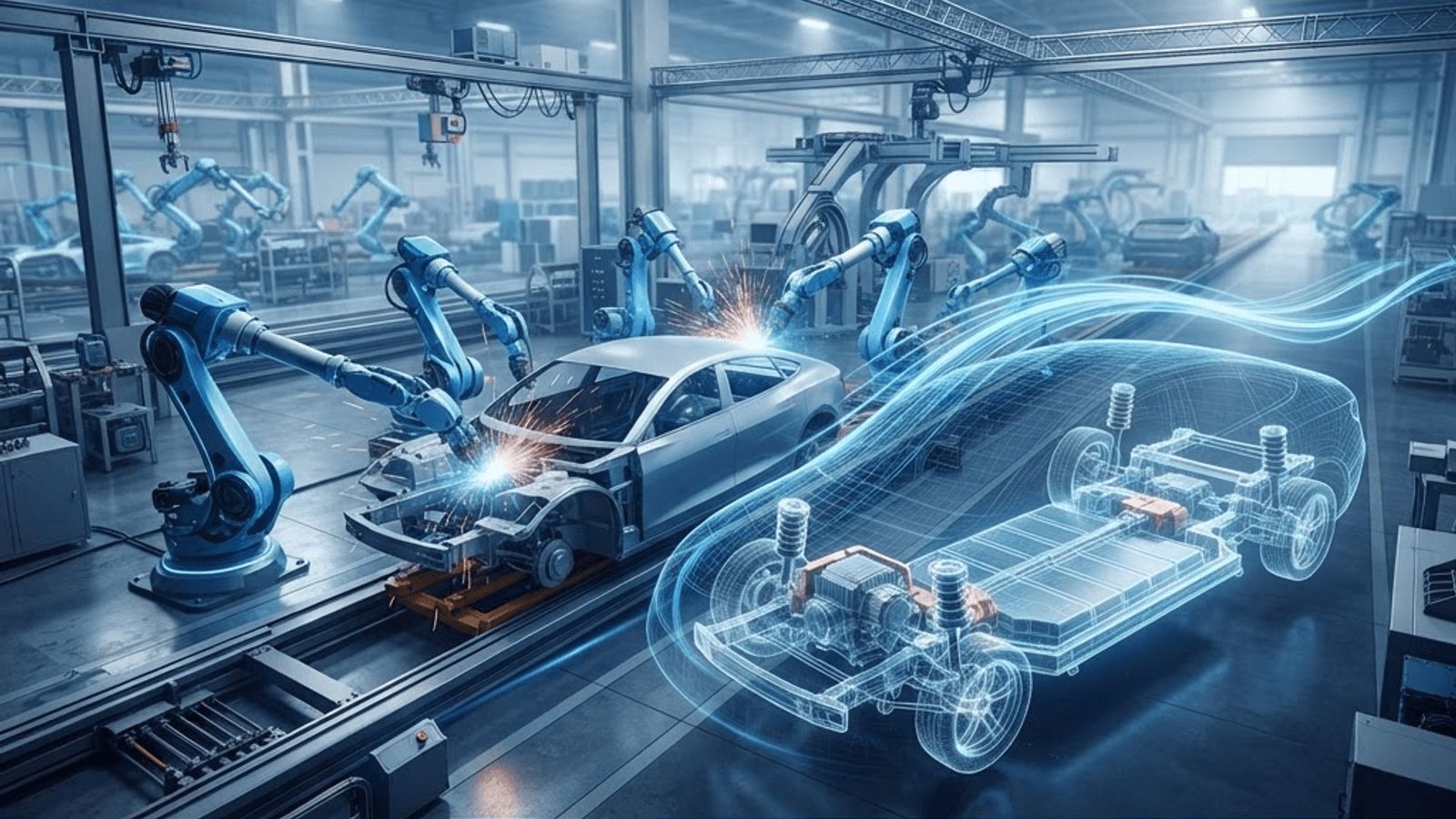
Bedford's Automotive Heritage and Present
Few towns have as direct an association with British vehicle manufacturing as Bedford. The town's name was carried on commercial vehicles for decades, and the engineering culture that developed around that industry left a lasting legacy in local skills, supplier relationships and technical education. While large-scale volume assembly no longer takes place in the town, automotive engineering remains a significant part of the local economy in a more specialised form.
Today's automotive businesses in and around Bedford focus on component manufacture, specialist and low-volume vehicle production, conversions and body building, electrification engineering, prototype and development work, and aftermarket and remanufacturing services. Proximity to the motorsport engineering cluster spanning Northamptonshire and Bedfordshire, and to research facilities in the wider region, supports a concentration of high-value engineering capability.
What the Local Sector Delivers
Activity spans precision machined and fabricated components, powertrain and driveline parts, suspension and chassis assemblies, wiring harnesses and electronic control modules, specialist vehicle conversions including welfare and commercial applications, body building for light commercial chassis, electric vehicle conversion and battery integration, prototype and development builds for manufacturers and research programmes, remanufacturing of units such as gearboxes and engines, and testing, validation and homologation support.
The Top 10 Automotive Manufacturers in Bedford
1. Ouse Valley Automotive Engineering
A precision component manufacturer supplying machined and fabricated parts to vehicle manufacturers and tier one suppliers. Its quality management systems, dimensional inspection capability and production part approval experience make it a credible supplier for safety-related components.
2. Castle Commercial Vehicle Bodies
Building and fitting bodies to light and medium commercial chassis, including box bodies, tipper conversions, dropsides and specialist equipment mounting. The company handles weight distribution calculations and type approval requirements that operators frequently overlook when specifying vehicles.
3. Harpur Powertrain Components
Manufacturing driveline and powertrain parts, including shafts, housings and transmission components, with capability in both traditional and electric drive applications. Its investment in machining accuracy reflects the tighter tolerances electric drivetrains typically require.
4. Riverside Electric Vehicle Systems
Focused on electrification, this business undertakes electric conversion engineering, battery pack integration, thermal management and high-voltage system design for commercial and specialist vehicles. Fleet operators seeking to convert existing vehicles form a growing part of its customer base.
5. Priory Prototype and Development Builds
Producing prototype vehicles, development mules and low-volume specialist builds for manufacturers, research programmes and niche vehicle producers. Rapid fabrication capability combined with engineering support allows concepts to be built and evaluated far faster than conventional processes permit.
6. Great Ouse Vehicle Conversions
Specialising in accessibility and welfare conversions, including wheelchair accessible vehicles, adapted controls and passenger transport modifications. Work is carried out to recognised safety standards, with attention to restraint systems and structural integrity after modification.
7. Kempston Automotive Electronics
Producing wiring harnesses, control modules and instrumentation for vehicle manufacturers and converters. As electrical content in vehicles continues to increase, its harness design and testing capability has become increasingly central to conversion and specialist build projects.
8. Bedfordshire Remanufacturing
Remanufacturing engines, gearboxes, differentials and hydraulic units to original specification, supporting fleet operators and equipment owners for whom replacement is uneconomic. Remanufacturing offers substantial cost and carbon savings compared with new component supply.
9. Bedford Chassis and Suspension Systems
Manufacturing suspension assemblies, subframes and chassis components, including bespoke work for specialist and motorsport applications. Its fabrication and jigging capability supports both prototype work and consistent small-series production.
10. Elstow Road Automotive Fabrication
A smaller engineering workshop providing fabrication, welding, machining and repair services to automotive businesses, restorers and specialist builders. Its flexibility on one-off and low-quantity work supports the wider local engineering ecosystem.
Supply Chain Expectations
Supplying the automotive industry involves demanding requirements that new entrants sometimes underestimate. Quality management certification specific to the sector is normally mandatory. Production part approval processes require documented evidence of capability before series supply begins. Traceability of materials and processes must be maintained, often for many years. Statistical process control and measurement system analysis are expected rather than optional, and problem resolution follows structured methodologies with defined timescales.
These requirements exist because a single defective component can trigger recalls costing enormous sums and causing serious safety consequences. Suppliers who invest properly in quality systems find that this discipline transfers well to other demanding sectors such as aerospace and medical devices.
Electrification and Sector Change
The transition to electric propulsion is reshaping automotive manufacturing profoundly. Component demand is shifting away from engines, fuel systems and complex transmissions towards batteries, power electronics, electric machines, thermal management and lightweight structures. Suppliers dependent on internal combustion components face genuine strategic risk, while those able to pivot towards electrification content see substantial opportunity.
Skills requirements are changing accordingly, with high-voltage safety competence, power electronics knowledge and software capability becoming essential. Bedford's engineering training provision and its existing precision manufacturing base position local businesses reasonably well for this transition, provided investment follows.
Trends in Automotive Manufacturing
Lightweighting continues to drive material innovation, including aluminium, composites and mixed-material joining. Software content is growing rapidly, with vehicle functionality increasingly defined by control systems rather than mechanical design. Supply chain resilience has risen sharply up the agenda following recent disruption, encouraging nearshoring and dual sourcing. Circular economy thinking, encompassing remanufacturing, battery second life and material recovery, is moving from concept to commercial practice.
Final Thoughts
Bedford's automotive sector has adapted from volume assembly to specialised, high-value engineering, and continues to hold real capability. Businesses sourcing locally benefit from engineering collaboration, shorter supply chains and quality systems built for demanding customers. Those operating in the sector should focus investment on electrification capability, software competence and quality accreditation, since these will determine which suppliers thrive through the transition ahead.
Want your brand featured in front of decision-makers? Publish a guest post or get a link insertion in our guides through AAMAX's guest post and link insertion service.
Helpful Links
 SponsoredAAMAX — Full-Service Digital Agency
Write for Us
Share your expertise with our readers. We welcome guest contributions from industry specialists.
Pitch your idea