Why Equipment Choice Defines a Highland Farming Season
Farming in and around Highland is a business of narrow windows. Planting has to happen when soil temperature and moisture align, spraying has to happen before pest pressure escalates, and harvest has to happen before weather turns. A machine that sits idle waiting for a part does not simply cost a repair bill, it costs yield. That is why experienced Highland growers evaluate agricultural equipment brands on two axes at once: the quality of the iron itself, and the depth of the support network standing behind it.
The regional equipment market has also shifted considerably. Precision agriculture features that were premium options a decade ago are now expected on mid-range tractors. Guidance systems, section control on planters and sprayers, yield mapping on combines and telematics that report machine health remotely have moved from novelty to baseline. Brands that have invested in open data standards and straightforward retrofit paths are winning favor among Highland operators who run mixed-age fleets rather than replacing everything at once.
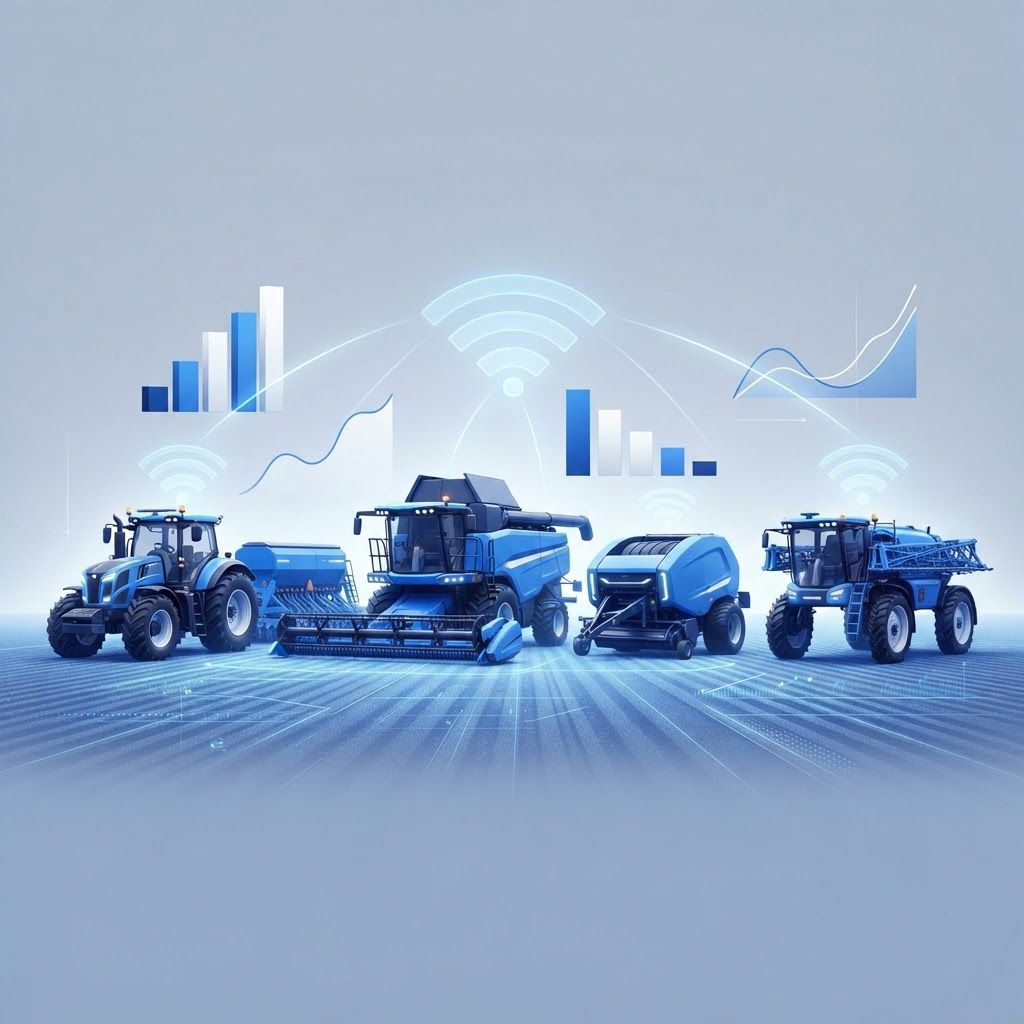
Full-Line Tractor and Harvest Brands
John Deere remains the reference point for many Highland operations, and for understandable reasons. The full-line catalogue spans compact utility tractors suitable for smallholdings through high-horsepower row-crop machines, self-propelled sprayers and combines. The brand's real differentiator in the region is the density of its dealer and parts network, which shortens downtime during harvest, plus a mature precision platform that ties guidance, documentation and machine monitoring into a single account.
Case IH is strongly represented among Highland grain and forage producers who value the brand's transmission engineering and its reputation for combine throughput in heavy crop. Operators frequently cite cab comfort on long days and the intuitive layout of controls as reasons for repeat purchase. The brand's tillage and planting lines give farms an option to standardise on one colour across primary field operations, simplifying training and parts inventory.
New Holland has built a loyal Highland following in hay and livestock operations. Its round and square balers, mower conditioners and mid-range utility tractors suit farms where forage quality drives profitability. New Holland's emphasis on alternative fuels and lower-emission drivelines also appeals to operations under pressure to document environmental performance for buyers or lenders.
Massey Ferguson occupies an important niche for Highland farms seeking capable machinery at a more accessible price point. The brand's utility and mid-horsepower tractors are known for mechanical simplicity that local technicians can service without specialist tooling, an advantage on farms that do much of their own maintenance between seasons.
Compact, Utility and Specialty Machinery
Kubota dominates the compact and sub-compact segment across Highland's smaller acreages, market gardens, orchards and grounds-maintenance operations. Its diesel engines have a strong longevity reputation, and the breadth of implements available for compact tractors, from loaders and backhoes to rotary cutters and tillers, lets one machine cover a surprising amount of work on a diversified holding.
Kioti has grown steadily in the same segment by offering generous standard specification, including loaders and cab options, at competitive prices. Highland buyers weighing value against brand prestige often shortlist Kioti alongside Kubota, and dealer relationships frequently decide the outcome.
Claas is the specialist choice for Highland forage contractors and larger livestock operations. Self-propelled forage harvesters, high-capacity balers and precision-chop technology deliver consistent silage quality, which directly affects milk and meat performance. Contractors covering many farms in a compressed season value the throughput and the brand's engineering focus on forage specifically rather than as an afterthought.
Fendt sits at the premium end of the Highland market. Its continuously variable transmissions, cab ergonomics and fuel efficiency appeal to large arable operations where annual hours are high enough that operating cost per hour outweighs purchase price. Farms that have adopted controlled traffic farming often gravitate to Fendt for its guidance accuracy and tyre-pressure management options.
Implements, Tillage and Application Equipment
Kinze is respected among Highland row-crop growers for planters and grain carts. Its planting technology emphasises consistent seed placement and singulation, which is the foundation of even emergence and, ultimately, yield. Modular row-unit design makes upgrades practical, allowing a farm to add electric drives or downforce control without replacing an entire toolbar.
Great Plains serves Highland farms working on conservation tillage and cover cropping. Its drills, vertical tillage tools and no-till planting equipment support residue management strategies that protect soil structure through wet regional winters. As soil health becomes a formal part of grant programmes and buyer requirements, equipment that enables reduced-disturbance systems carries added value.
Trends Shaping the Highland Equipment Market
Three currents are reshaping purchasing decisions locally. First, connectivity: telematics that flag a failing sensor before it becomes a breakdown are now a genuine uptime tool rather than a dealer selling point. Second, autonomy and automation: driver-assist features, automated headland turns and implement-aware section control reduce operator fatigue at a time when experienced seasonal labour is difficult to secure. Third, the used-equipment and rebuild market has matured. Many Highland farms deliberately buy well-maintained late-model machines and invest the savings in precision retrofits, achieving most of the productivity gain at a fraction of new-machine capital cost.
How to Evaluate an Equipment Brand
Beyond spec sheets, ask practical questions. How far is the nearest service technician, and what is realistic response time during peak season? What is the parts fill rate for common wear items? Does the brand's data platform export in formats your agronomist and grain buyer can use? What has resale performance looked like for that model line in the region? And crucially, can the dealer supply a demonstration unit on your own ground, in your own conditions, before you commit?
Conclusion
The strongest agricultural equipment brands serving Highland combine durable engineering with a support structure that keeps machines working when the calendar allows no delay. Whether the priority is high-horsepower arable capacity, forage quality, compact versatility or precision planting, the region is served by manufacturers with genuinely different strengths. Matching those strengths to your own acreage, crop mix and maintenance capability, rather than to brand reputation alone, is what turns an equipment purchase into a lasting productivity gain.
Want your brand featured in front of decision-makers? Publish a guest post or get a link insertion in our guides through AAMAX's guest post and link insertion service.
Helpful Links
 SponsoredAAMAX — Full-Service Digital Agency
Write for Us
Share your expertise with our readers. We welcome guest contributions from industry specialists.
Pitch your idea