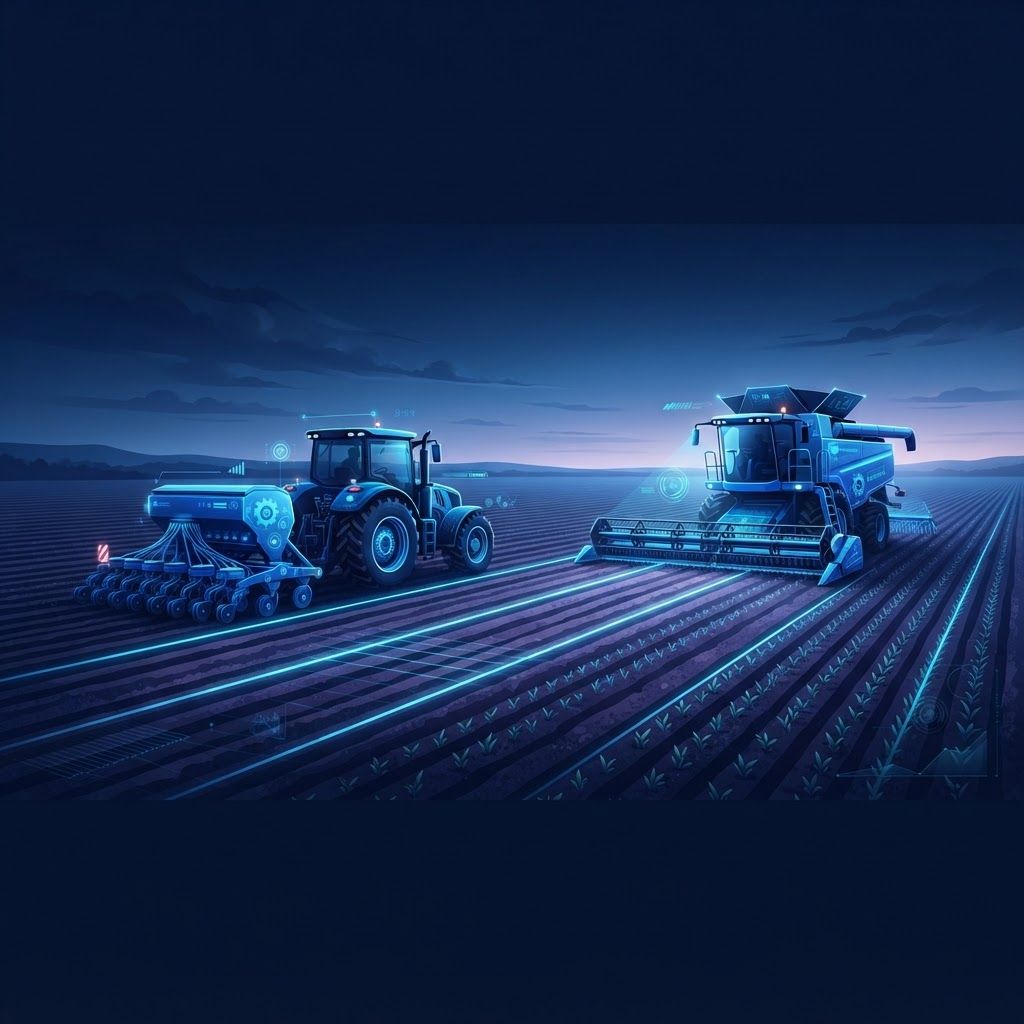
Machinery at the Heart of Lincolnshire Farming
Few districts test agricultural machinery as thoroughly as East Lindsey. The soils range from light chalk over the Wolds to heavy silts and peats toward the marsh and fen edge. Field sizes vary from compact enclosures to vast open blocks. Weather windows can be tight, and when conditions allow work to proceed, machinery must run reliably for very long days.
That environment has produced discerning buyers. Farmers here evaluate equipment on output per hour, fuel efficiency, ease of maintenance, resale value and, above all, the quality of dealer support. A brand with an outstanding machine and a poor local dealer will not succeed in this district, because a breakdown during a narrow drilling or harvest window is far more expensive than any purchase price difference.
Ten Agricultural Equipment Brands Serving East Lindsey
1. Wolds Tractor Systems. Producing and supplying tractors across a wide power range with transmissions suited to both cultivation and transport work, this brand emphasises operator comfort during long shifts and straightforward serviceability.
2. Lindsey Harvest Machinery. Focused on combine harvesters and forage equipment, this brand builds machines with high throughput capacity and grain-friendly threshing, backed by seasonal support teams during the critical harvest weeks.
3. Marsh Cultivation Equipment. Manufacturing ploughs, subsoilers, discs and combination cultivators designed for the heavier silt soils of the district, with wearing metal specifications chosen for abrasive conditions.
4. Louth Seed Drill Technology. Specialising in precision and combination drills, including direct and minimum tillage systems, this brand supports the district's growing interest in reduced cultivation and soil structure preservation.
5. Horncastle Crop Protection Sprayers. Producing trailed and self-propelled sprayers with section control, automatic boom levelling and accurate rate control, technologies that reduce chemical use and improve application accuracy.
6. Coastal Grain Handling Systems. Building grain dryers, conveyors, elevators and storage ventilation designed around energy efficiency and grain quality, essential infrastructure for a major cereal-producing district.
7. Spilsby Precision Agriculture Technology. Providing guidance systems, yield monitoring, variable rate controllers and farm data platforms that integrate across mixed machinery fleets rather than locking farms into one manufacturer.
8. Alford Root Crop Equipment. Manufacturing potato and sugar beet harvesters, planters and handling equipment with gentle handling systems that minimise bruising and damage, critical for crops sold on appearance.
9. Bolingbroke Livestock Equipment. Supplying feeding systems, handling races, housing equipment and slurry management machinery for beef, sheep and poultry enterprises across the district.
10. Skegness Horticultural Machinery. Serving vegetable and salad growers with transplanters, bed formers, irrigation equipment and specialist harvesting aids suited to intensive field horticulture.
Technology Transforming Farm Machinery
The pace of change in agricultural equipment has been remarkable. Satellite guidance and automatic steering are now standard rather than premium, delivering immediate savings by eliminating overlap in every pass. Section control on sprayers and drills shuts off individual sections in already-treated areas, cutting input use noticeably on irregularly shaped fields.
Telematics allows machines to report their position, fuel use, output and fault codes remotely. For contractors and larger farms managing multiple machines, this transforms scheduling and maintenance planning. Dealers can often diagnose faults before a technician leaves the workshop, arriving with the correct part.
Autonomy is beginning to appear, initially in specific tasks such as repetitive cultivation, mechanical weeding and monitoring. Full autonomy remains some distance from mainstream adoption, but the direction is clear, and the district's larger arable operations are among those watching most closely.
Alternative power is developing more slowly for high-draft field work, where energy density requirements are severe. Smaller electric machines for yard and horticultural work are already practical, and interest in biomethane and hydrogen for larger tractors continues.
Choosing Agricultural Equipment Wisely
Match capacity to your actual workload rather than to peak ambition. Oversized machinery carries unnecessary capital and depreciation cost and can cause compaction problems on vulnerable soils. Undersized machinery risks missing weather windows. Calculate required output honestly using realistic working hours.
Investigate dealer support before brand reputation. Ask other farmers locally about response times, parts availability and technician competence. A dealer holding good parts stock within the district and offering harvest-period cover is worth a considerable premium.
Consider total cost of ownership across the intended ownership period, including fuel consumption, service intervals, wearing parts and expected residual value. A machine with a higher purchase price and strong resale can easily be cheaper overall.
Evaluate compatibility with existing equipment and data systems. Guidance systems, implement control standards and farm software should work together, and proprietary systems that refuse to communicate create lasting frustration.
Consider alternatives to outright purchase. Contracting, machinery sharing, hire and finance arrangements all reduce capital exposure, particularly for equipment used intensively but briefly, such as harvesters.
The Outlook for Farm Machinery in East Lindsey
Demand for capable, efficient machinery in this district will remain strong because the farming here is intensive, high-value and time-critical. The emphasis is shifting toward equipment that reduces inputs, protects soil and produces usable data, rather than simply toward greater size and power.
Brands and dealers that combine robust engineering, genuine local support and open, interoperable technology will continue to earn the confidence of Lincolnshire farmers, who judge machinery not on specifications but on whether it keeps working when the weather window opens.
Want your brand featured in front of decision-makers? Publish a guest post or get a link insertion in our guides through AAMAX's guest post and link insertion service.
Helpful Links
 SponsoredAAMAX — Full-Service Digital Agency
Write for Us
Share your expertise with our readers. We welcome guest contributions from industry specialists.
Pitch your idea