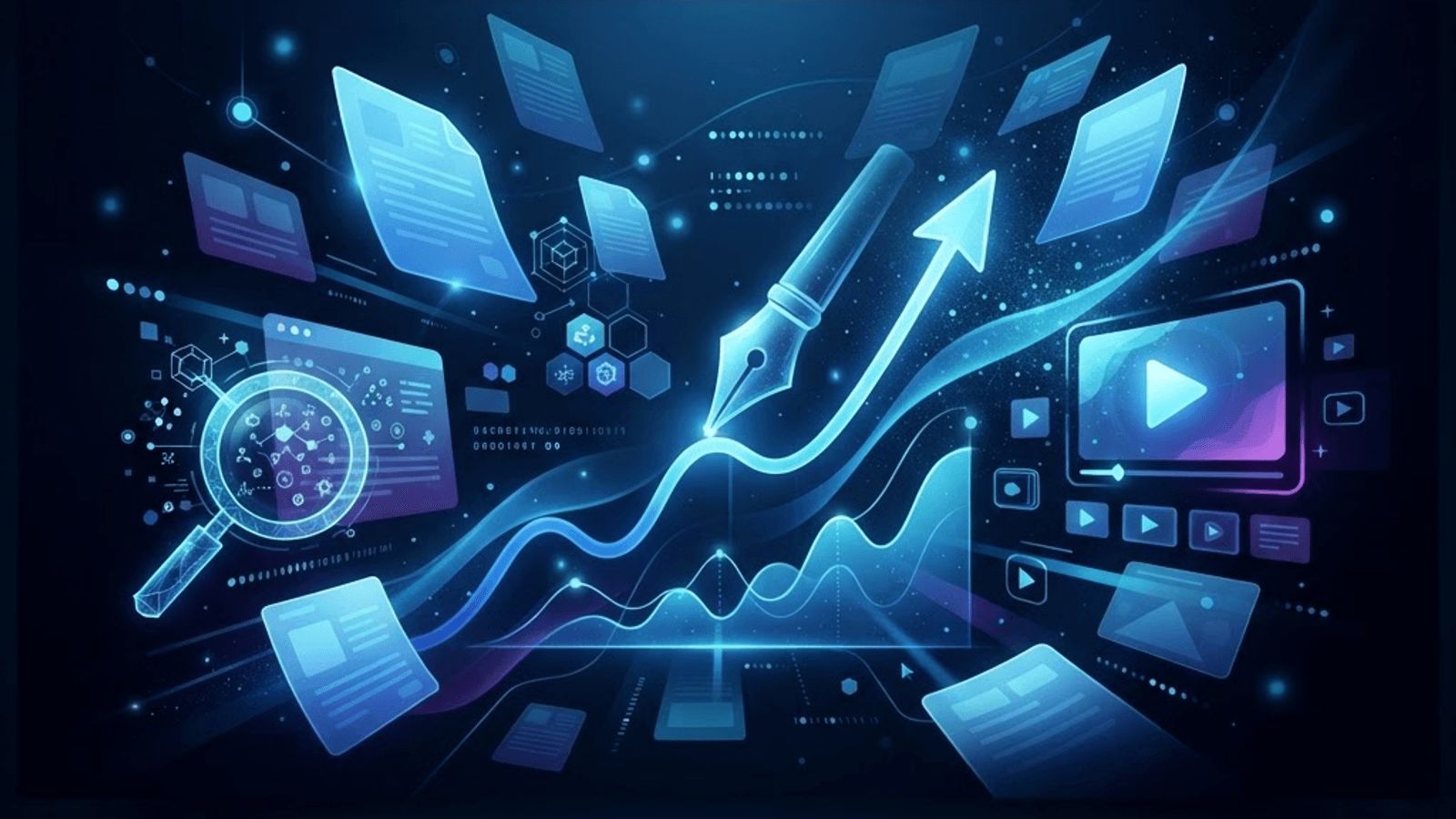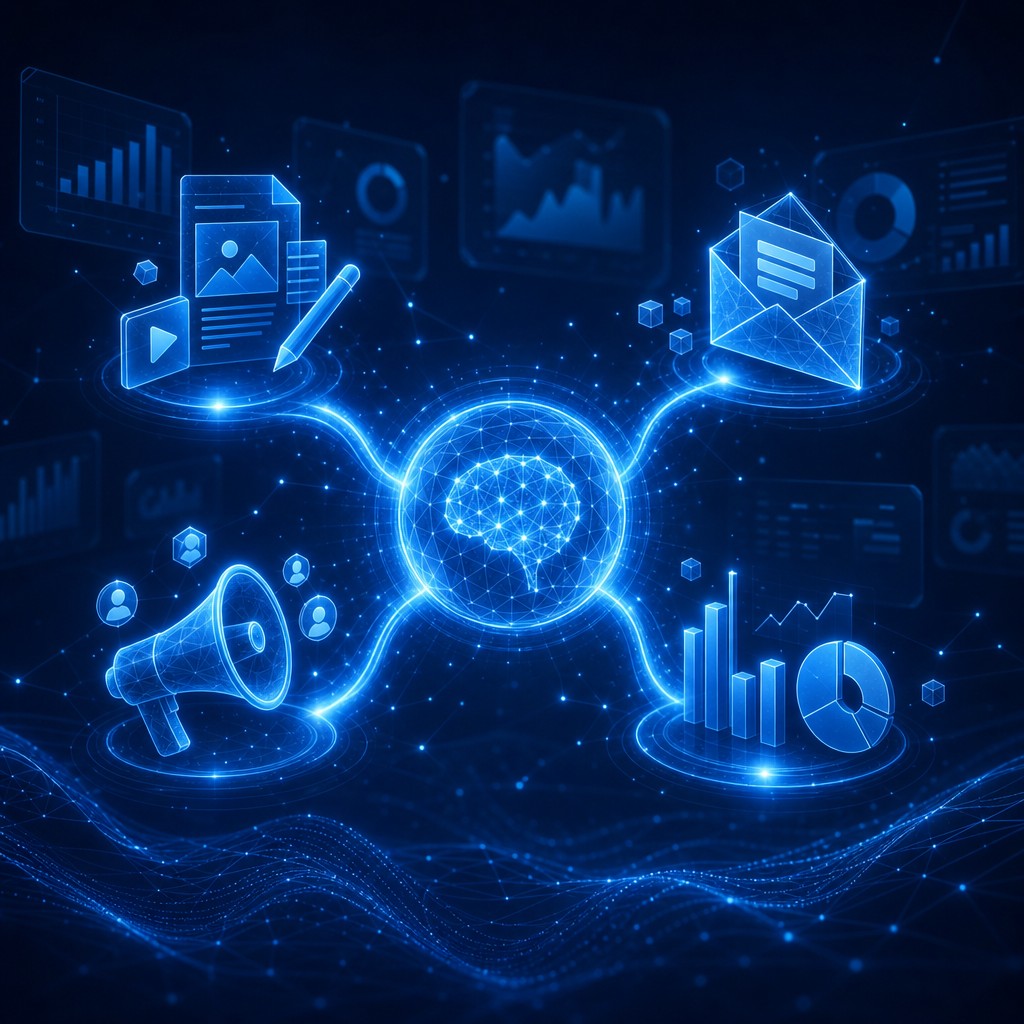
Artificial intelligence has woven itself into nearly every corner of modern marketing. What began as a tool for a handful of specialized tasks now touches content, advertising, analytics, customer service, and strategy. Understanding how marketers are actually using AI, rather than how they theoretically could, offers a practical roadmap for teams looking to keep pace. The applications described here are not speculative; they are the everyday workflows shaping marketing in 2025 and 2026. By examining the most common uses, you can identify where AI can deliver the most value for your own organization.
How AAMAX.CO Puts AI Marketing Into Practice
Knowing how marketers use AI is one thing; implementing those use cases effectively is another. AAMAX.CO is a full-service digital marketing company that helps businesses worldwide turn AI capabilities into real campaigns and measurable results. Their team works across the full spectrum of digital marketing, helping clients deploy AI where it drives the most impact rather than spreading effort thin. Businesses that want to apply these AI use cases with expert guidance can learn more at AAMAX.CO.
Content Creation and Ideation
Content is the most widespread application of AI in marketing. Marketers use AI to brainstorm topics, draft blog posts, write email copy, generate social media captions, and create images. The technology excels at overcoming the blank page, producing first drafts that humans then refine. Beyond writing, AI helps repurpose existing content, turning a single webinar into blog posts, social snippets, and email sequences. This dramatically increases output without proportionally increasing effort, allowing lean teams to maintain a consistent, high-volume presence across channels.
Personalization at Scale
One of AI's most valuable contributions is enabling personalization that would be impossible to achieve manually. Marketers use AI to tailor website experiences, email content, and product recommendations to individual users based on their behavior and preferences. By analyzing patterns across thousands or millions of interactions, AI predicts what each customer is most likely to want and delivers it at the right moment. This level of one-to-one relevance, once reserved for the largest enterprises, is now accessible to businesses of all sizes.
Advertising and Campaign Optimization
Paid media is deeply AI-driven. Marketers rely on machine learning within ad platforms to optimize bidding, target audiences, and test creative variations automatically. AI continuously analyzes performance and reallocates budget toward what works, improving return on ad spend with minimal manual intervention. Marketers also use AI to generate and test multiple ad variations quickly, identifying winning combinations far faster than traditional A/B testing alone.
Data Analysis and Predictive Insights
Marketing generates enormous amounts of data, and AI helps make sense of it. Marketers use AI to analyze customer behavior, identify trends, forecast demand, and predict which leads are most likely to convert. Predictive analytics helps teams anticipate customer needs and act proactively rather than reactively. AI also automates reporting, surfacing insights from complex datasets that would take analysts hours to uncover manually, freeing teams to focus on acting on those insights.
Customer Service and Engagement
Chatbots and AI assistants have become standard tools for customer engagement. Marketers deploy them to answer common questions instantly, qualify leads, guide users through purchases, and provide round-the-clock support. Modern conversational AI handles increasingly complex interactions, improving customer satisfaction while reducing the load on human teams. These tools also capture valuable data about customer questions and pain points that inform broader marketing strategy.
Search and Discovery Optimization
As search behavior evolves, marketers are using AI both to optimize traditional SEO and to adapt to new AI-driven discovery surfaces. AI assists with keyword research, content optimization, and identifying gaps in coverage. Increasingly, marketers also optimize for visibility within AI assistants and generative search engines, ensuring their brands appear when consumers ask AI tools for recommendations. This emerging discipline is becoming a critical part of the modern marketing toolkit.
Workflow Automation
Beyond specific functions, marketers use AI to automate repetitive workflows that previously consumed significant time. This includes scheduling, lead routing, follow-up sequences, data entry, and cross-channel coordination. By automating routine tasks, teams reduce errors and reclaim time for strategic and creative work. The cumulative effect of many small automations is a marketing operation that runs faster and more reliably.
Using AI Effectively, Not Just Widely
The most successful marketers do not simply adopt AI everywhere; they apply it strategically where it delivers the most value. They pair AI efficiency with human judgment, using the technology to handle scale and speed while reserving creativity, brand voice, and strategic decisions for people. They also measure results carefully, ensuring AI investments translate into real business outcomes rather than just activity. This disciplined approach separates teams that genuinely benefit from AI from those that merely experiment with it.
Conclusion
Marketers are using AI across content, personalization, advertising, analytics, customer service, search, and workflow automation. The breadth of these applications reflects how thoroughly AI has become integrated into the profession. The greatest returns come not from using AI in the most places, but from using it most effectively, pairing its speed and scale with human strategy and creativity. For teams ready to move from scattered experimentation to focused, results-driven implementation, expert guidance can make all the difference.
Want your brand featured in front of decision-makers? Publish a guest post or get a link insertion in our guides through AAMAX's guest post and link insertion service.
Helpful Links
 SponsoredAAMAX — Full-Service Digital Agency
Write for Us
Share your expertise with our readers. We welcome guest contributions from industry specialists.
Pitch your idea