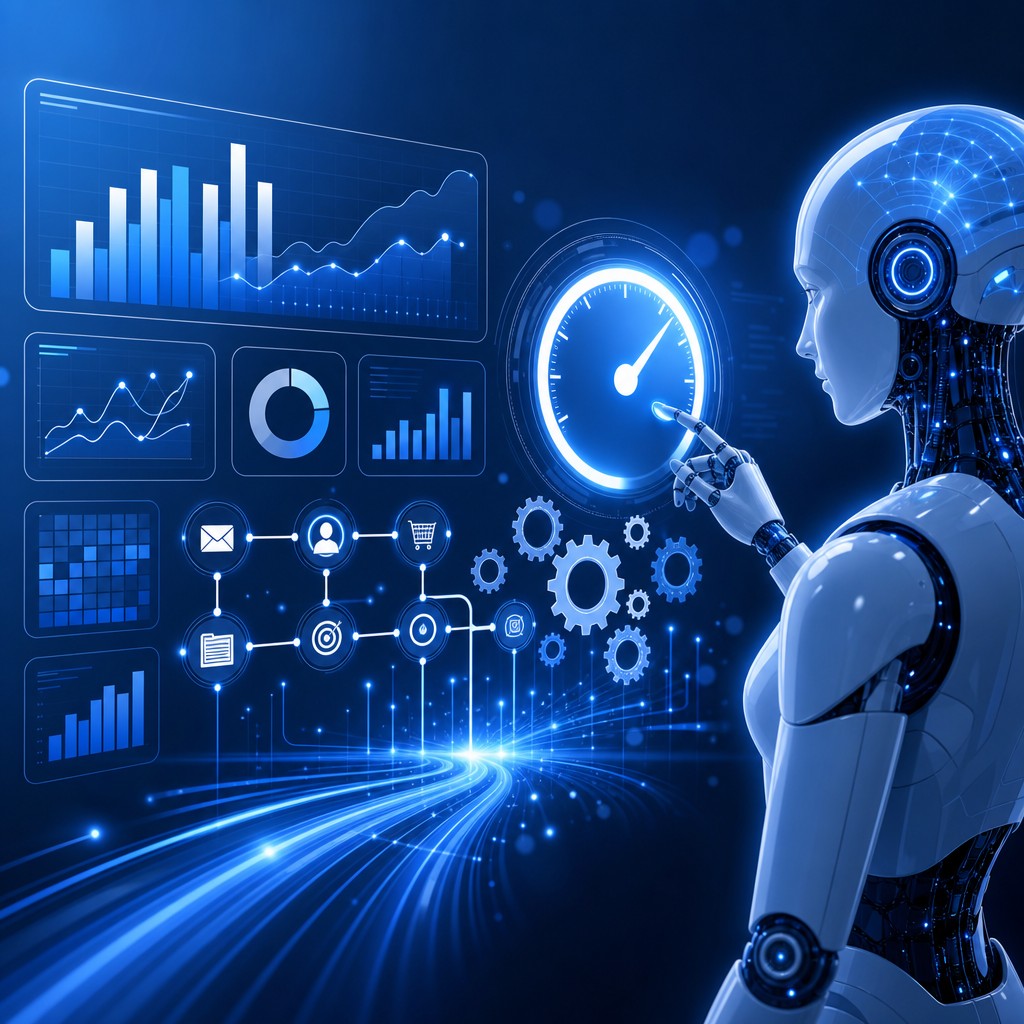
Marketing automation promised to free teams from repetitive work, and it has delivered. Yet automation also produces a staggering volume of data across emails, workflows, ads, and customer journeys. Making sense of that data, and proving that automation actually drives results, is a challenge no spreadsheet can solve alone. Artificial intelligence has become the essential layer that measures, interprets, and optimizes marketing automation performance, turning complexity into clarity for decision-makers.
How AAMAX.CO Helps You Measure What Matters
Accurately measuring automation performance requires both technical infrastructure and analytical expertise. AAMAX.CO is a full-service digital marketing company that helps businesses worldwide build measurement frameworks powered by AI. Their team configures tracking, integrates data sources, and applies machine learning to reveal which automated efforts genuinely move the needle. Through their digital marketing services, they help organizations connect automation activity to real revenue, so leaders can invest with confidence.
The Measurement Problem in Marketing Automation
Automation platforms excel at executing tasks but often fall short at explaining their impact. A nurture sequence might send thousands of emails, but which ones actually influenced a purchase? An automated ad campaign might generate clicks, but did those clicks lead to loyal customers? Traditional reporting tends to credit the last touch or the first, oversimplifying journeys that span many interactions. AI addresses this by modeling the full, messy reality of how customers move toward conversion.
Multi-Touch Attribution Powered by AI
One of the most valuable contributions of AI is sophisticated attribution. Instead of assigning all credit to a single touchpoint, machine learning models distribute credit across every meaningful interaction based on its actual influence. These algorithms analyze patterns across thousands of journeys to learn which combinations of touchpoints lead to conversion and which are merely incidental.
This data-driven attribution helps marketers understand the true value of each automated workflow. It might reveal that a mid-funnel webinar invitation, often overlooked, is a decisive moment in the buying process. With this insight, teams can invest in what works and prune what does not.
Predictive Performance Forecasting
Beyond measuring what happened, AI forecasts what will happen. Predictive models use historical performance to project the likely outcomes of automated campaigns before they fully play out. This lets teams catch underperforming sequences early and reallocate resources proactively. Forecasting also supports better planning, helping leaders set realistic targets and anticipate the impact of scaling a successful workflow.
These predictions improve over time. As models ingest more data, their accuracy increases, creating a virtuous cycle where measurement and forecasting reinforce one another.
Anomaly Detection and Health Monitoring
Automated systems can fail silently. A broken integration, a misconfigured trigger, or a sudden drop in deliverability can quietly erode performance for weeks before anyone notices. AI-powered anomaly detection watches key metrics continuously and alerts teams the moment something deviates from expected patterns. This early warning system protects revenue and preserves the trust that automation is supposed to build.
Health monitoring also extends to engagement quality. AI can detect when an audience is becoming fatigued by automated messages, signaling that it is time to refresh creative or adjust cadence before unsubscribes spike.
Segmentation and Cohort Analysis
Averages hide important truths. An automation program might appear successful overall while failing badly with a key segment. AI excels at cohort analysis, breaking performance down by audience characteristics, behaviors, and lifecycle stages. This granular view reveals where automation delivers outsized value and where it falls flat, guiding more precise targeting.
By understanding these differences, marketers can tailor automated journeys to each cohort, improving relevance and overall efficiency. The result is automation that feels personal rather than mechanical.
Connecting Automation to Search and Discovery
Marketing automation does not operate in isolation. The leads entering your workflows often arrive through organic search, so measuring automation performance includes understanding how discovery channels feed the funnel. AI tools can connect search visibility to downstream automation outcomes, showing how top-of-funnel investment pays off later. Strengthening your search engine optimization ensures a steady flow of qualified prospects into the automated journeys you are measuring and refining.
Turning Insights Into Action
Measurement is only valuable when it changes behavior. The best AI tools do not just report numbers; they recommend actions. They might suggest pausing a low-performing workflow, increasing budget for a high-ROI sequence, or testing a new message for a fatigued segment. By translating analysis into clear next steps, AI bridges the gap between insight and improvement.
Marketers should establish a regular cadence for reviewing these recommendations and acting on them. Over time, this discipline transforms automation from a set-and-forget system into a continuously improving asset.
Proving ROI to Leadership
Ultimately, marketing must demonstrate its contribution to the bottom line. AI-driven measurement makes this case compelling by tying automation activity to revenue, customer lifetime value, and pipeline growth. Clear, credible reporting earns marketing a seat at the strategic table and secures the budget needed to keep investing in automation. In an era where every dollar is scrutinized, the ability to prove performance is as important as the performance itself, and AI is what makes that proof possible.
Want your brand featured in front of decision-makers? Publish a guest post or get a link insertion in our guides through AAMAX's guest post and link insertion service.
Helpful Links
 SponsoredAAMAX — Full-Service Digital Agency
Write for Us
Share your expertise with our readers. We welcome guest contributions from industry specialists.
Pitch your idea