For years, marketing teams have wrestled with the tedious, time-consuming task of pulling together performance reports. Analysts would log into a dozen platforms, copy numbers into spreadsheets, build charts, and spend hours interpreting what it all meant, often days after the campaign window had closed. Artificial intelligence is rewriting this entire workflow. Today, AI tools can automatically collect, analyze, and visualize marketing content performance in real time, freeing teams to focus on strategy rather than data entry. Understanding how this automation works is essential for any organization that wants to stay competitive in a fast-moving digital landscape.
Partner With AAMAX.CO for AI-Driven Reporting
Implementing automated performance reporting can feel overwhelming without the right expertise, which is where AAMAX.CO comes in. As a full-service digital marketing company serving clients worldwide, they help businesses integrate AI reporting tools, build custom dashboards, and turn raw data into actionable insights. Their team specializes in connecting analytics platforms, automating recurring reports, and ensuring marketers always have a clear, accurate picture of how their content is performing. Whether a company is just getting started with automation or scaling an existing setup, they provide the strategic guidance needed to make AI reporting deliver real value.
What Performance Reporting Used to Look Like
Traditional marketing reporting was reactive and labor-intensive. Teams relied on manual exports from analytics platforms, social channels, email tools, and ad managers. Each data source had its own format, its own metrics, and its own login. Consolidating everything into a single coherent report could take an entire workday, and by the time the report was finished, the data was often stale. Worse, manual processes are prone to human error, copy-paste mistakes, broken formulas, and inconsistent date ranges that quietly distort the story the numbers are supposed to tell.
How AI Automates Data Collection
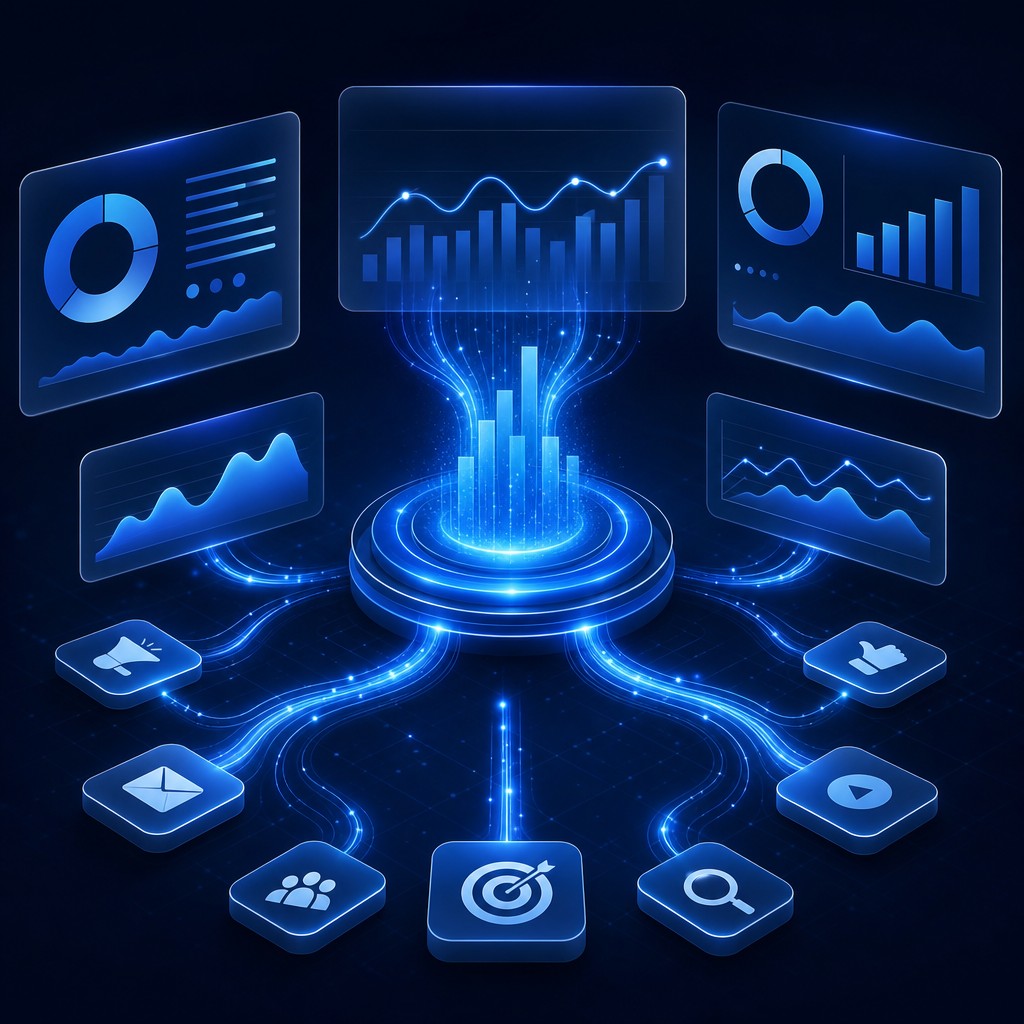
The first thing AI tools automate is data aggregation. Instead of logging into each platform separately, AI-powered reporting systems use integrations and APIs to pull data continuously from every channel into a centralized hub. Machine learning models then normalize this data, reconciling different naming conventions, currencies, and time zones so that everything lines up correctly. This means a marketer can open a single dashboard and see unified metrics across paid search, organic traffic, social media, and email, all updated automatically without anyone lifting a finger.
Turning Raw Numbers Into Insights
Collecting data is only half the battle. The real power of AI lies in interpretation. Modern reporting tools use natural language generation to write plain-English summaries of what the data shows. Instead of staring at a table of figures, a marketer might read a sentence like, "Blog engagement rose 18 percent this week, driven largely by organic traffic to your AI strategy articles." AI can also detect anomalies automatically, flagging a sudden drop in conversions or an unexpected spike in bounce rate so teams can react before small issues become big problems.
Predictive and Prescriptive Analytics
AI does not just report on the past, it anticipates the future. Predictive models analyze historical performance to forecast how content is likely to perform, helping teams allocate budget and effort more wisely. Prescriptive analytics goes a step further by recommending specific actions, such as reallocating spend toward a high-performing channel or refreshing an article that is beginning to lose search visibility. This forward-looking capability transforms reporting from a rearview mirror into a navigation system. Combining these insights with strong search engine optimization ensures that content continues to earn visibility long after it is published.
Real-Time Dashboards and Custom Alerts
One of the most valued features of AI reporting is real-time visibility. Live dashboards update continuously, giving stakeholders an always-current view of performance without waiting for a weekly or monthly report. Custom alerts can be configured to notify the right people the moment a key metric crosses a threshold, whether that is a viral content piece gaining traction or an ad campaign burning through its budget faster than expected. This immediacy allows marketing teams to be proactive rather than reactive.
Saving Time and Reducing Costs
The efficiency gains from automation are substantial. Tasks that once consumed dozens of hours each month can now be completed in seconds. This not only reduces labor costs but also reallocates skilled analysts toward higher-value work like strategy, creative experimentation, and audience research. For smaller teams, automation effectively adds capacity, allowing a lean department to operate with the analytical horsepower of a much larger one.
Best Practices for Adopting AI Reporting
To get the most from AI reporting, businesses should start by clearly defining the metrics that matter most to their goals. Feeding AI tools clean, well-structured data is essential, as automation amplifies both good and bad inputs. Teams should also maintain a human layer of oversight, using AI to surface insights while relying on experienced marketers to interpret context and make final decisions. Finally, organizations should treat reporting as an evolving system, continually refining dashboards and alerts as goals and channels change.
The Road Ahead
As AI continues to mature, performance reporting will become even more conversational and intuitive. Marketers will increasingly ask questions in plain language and receive instant, accurate answers backed by live data. The teams that embrace these tools today will build the habits and infrastructure needed to thrive tomorrow. Automated reporting is no longer a futuristic luxury, it is quickly becoming a baseline expectation for any data-driven marketing operation, and the businesses that adopt it now will hold a meaningful competitive edge.
Want your brand featured in front of decision-makers? Publish a guest post or get a link insertion in our guides through AAMAX's guest post and link insertion service.
Helpful Links
 SponsoredAAMAX — Full-Service Digital Agency
Write for Us
Share your expertise with our readers. We welcome guest contributions from industry specialists.
Pitch your idea