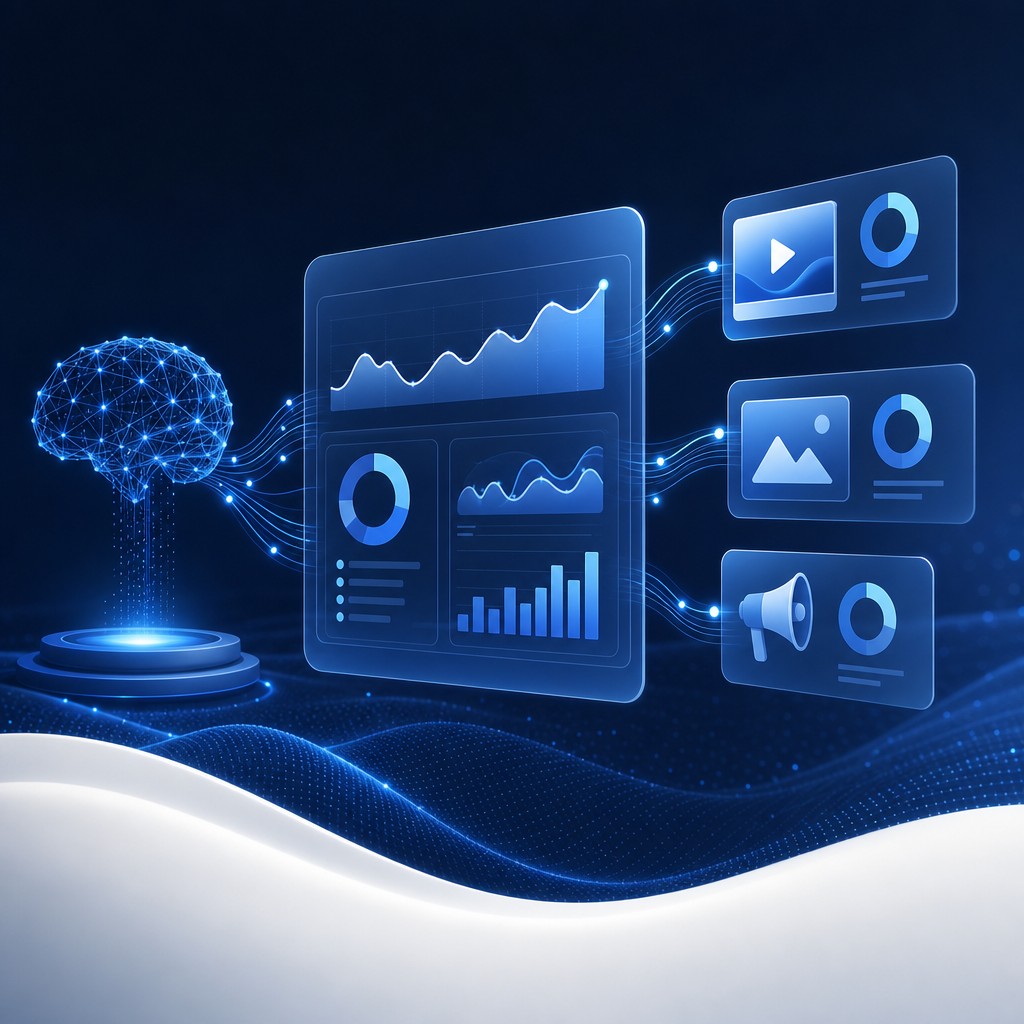
Creating great marketing content is only half the battle; knowing whether it actually works is what separates thriving brands from those flying blind. With content spread across blogs, social platforms, email, video, and paid channels, tracking performance has become genuinely complex. Artificial intelligence brings clarity to this chaos. By unifying scattered data, identifying meaningful patterns, and predicting outcomes, AI helps marketers understand exactly what their content is achieving and how to make it better.
How AAMAX.CO Turns Data Into Direction
Measurement is only valuable when it leads to better decisions. AAMAX.CO is a full-service digital marketing company that helps brands worldwide build analytics systems powered by AI. Their team connects fragmented data sources, defines the metrics that truly matter, and translates dashboards into clear creative and strategic recommendations. By working with AAMAX.CO, marketing teams move beyond vanity metrics and start making confident, data-backed decisions that improve content return on investment.
The Problem With Fragmented Data
Most marketing teams juggle a dozen tools, each with its own dashboard and definitions. Social platforms report engagement differently than email systems, which differ again from web analytics. Stitching this together manually is tedious and error prone, and by the time a report is ready, the insights may already be stale. This fragmentation makes it hard to see the full customer journey and even harder to attribute results accurately.
Unified Measurement With AI
AI-powered analytics platforms ingest data from every channel and normalize it into a single, coherent view. Machine learning reconciles inconsistent metrics, fills gaps, and connects touchpoints across the journey. Instead of toggling between tools, marketers get one source of truth that updates in real time. This unified perspective reveals how content pieces work together, showing which assets initiate interest and which ones close the deal.
Smarter Attribution Modeling
One of AI's biggest contributions to performance tracking is advanced attribution. Simple last-click models give all the credit to the final touchpoint, ignoring everything that came before. AI-driven attribution analyzes the entire path to conversion and assigns credit based on each touchpoint's actual influence. This helps teams understand the true value of awareness content, nurturing sequences, and supporting assets that traditional models overlook, leading to smarter budget allocation across digital marketing efforts.
Surfacing Insights, Not Just Data
Dashboards full of numbers are only useful if someone can interpret them. AI goes further by automatically surfacing insights in plain language. It can flag a sudden spike in engagement, identify which topics drive the most qualified leads, and alert teams when a piece of content is underperforming relative to expectations. These proactive insights mean marketers spend less time hunting through reports and more time acting on what matters.
Predicting Future Performance
AI does not just report on what happened; it forecasts what will happen next. By learning from historical content performance, predictive models estimate how new pieces are likely to perform before they are even published. This helps teams prioritize the topics and formats with the highest potential and avoid investing in content unlikely to deliver. Pairing these forecasts with strong search engine optimization ensures content is built to attract sustained organic traffic over time.
Closing the Loop on Content Strategy
The real power of AI-driven tracking is the feedback loop it creates. As performance data flows in, AI identifies the characteristics of winning content, from headline structure to topic depth to publishing cadence. These learnings feed directly back into the content strategy, making each new piece smarter than the last. Over time, this continuous improvement compounds into a meaningful competitive advantage.
Getting Started With AI Tracking
To begin, define the outcomes that genuinely matter to your business, whether that is qualified leads, revenue, or retention. Connect your data sources into a unified platform and establish consistent tracking standards. Use AI to monitor performance, surface insights, and forecast results, but keep humans in the loop to provide context and strategic judgment. With this approach, marketers can finally answer the most important question with confidence: is our content actually working, and how do we make it work even better?
Want your brand featured in front of decision-makers? Publish a guest post or get a link insertion in our guides through AAMAX's guest post and link insertion service.
Helpful Links
 SponsoredAAMAX — Full-Service Digital Agency
Write for Us
Share your expertise with our readers. We welcome guest contributions from industry specialists.
Pitch your idea