Market research has always been about understanding people: what they want, why they buy, and how they feel. Traditionally this required surveys, interviews, focus groups, and painstaking analysis. AI now promises to accelerate and even automate much of this work, analyzing enormous datasets and surfacing patterns in seconds. This raises an important question for businesses: can AI replace humans for market research? The answer reveals both the remarkable power of AI and the enduring value of human insight.
Smarter Market Insights With AAMAX.CO
Turning raw data into decisions that actually grow a business requires both advanced tools and human interpretation, and that is where expert partners prove invaluable. AAMAX.CO is a full-service digital marketing company helping clients worldwide combine AI-powered research with strategic human analysis. They help businesses gather the right data, apply AI to process it efficiently, and translate the findings into marketing strategies that resonate with real customers. With AAMAX.CO, organizations gain insights that are not just fast, but genuinely actionable and grounded in business reality.
Where AI Transforms Market Research
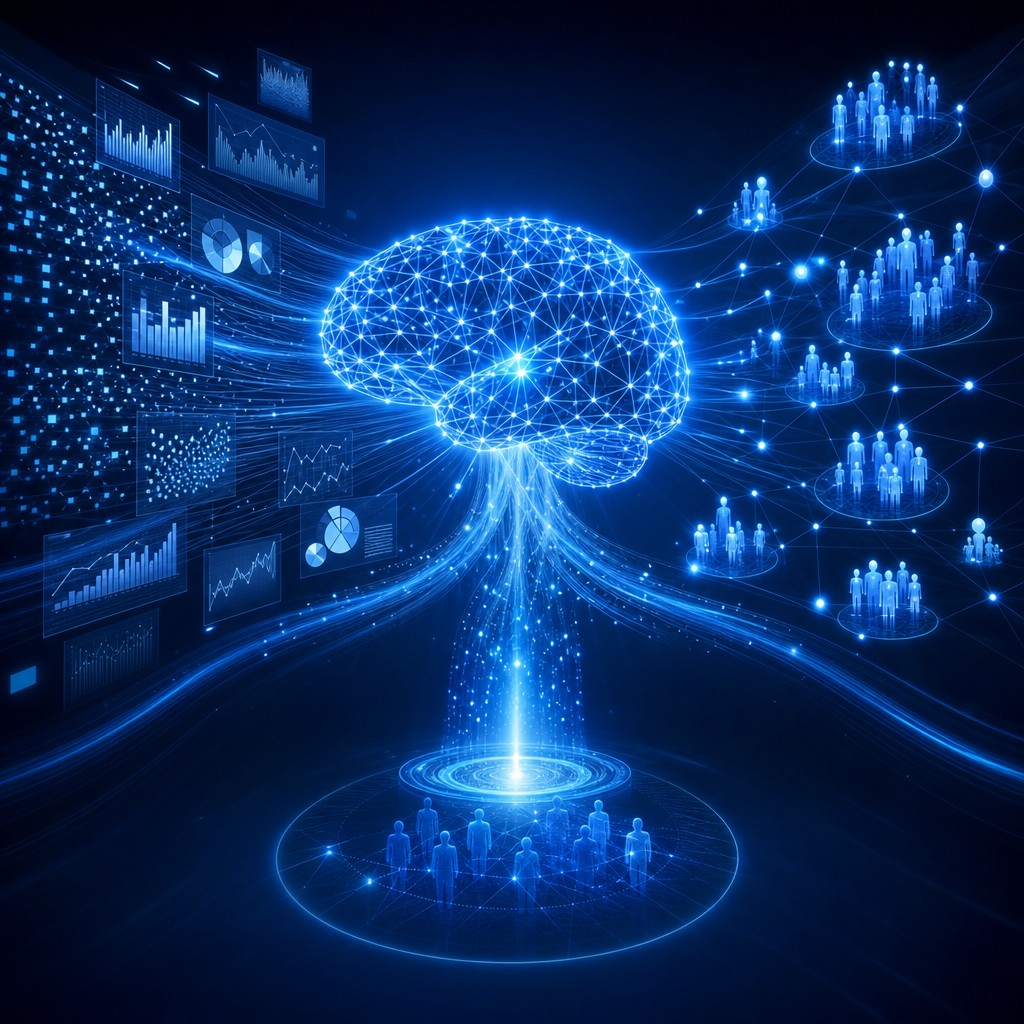
AI's greatest strength is processing data at a scale and speed no human team could match. It can analyze millions of social media posts, reviews, and survey responses to detect sentiment, trends, and emerging themes almost instantly. It identifies patterns and correlations buried in data that would take human analysts weeks to uncover, and it does so without fatigue or bias from a long workday.
AI also automates time-consuming tasks: cleaning datasets, categorizing responses, summarizing open-ended feedback, and generating reports. It can monitor markets continuously, alerting businesses to shifts in real time rather than in quarterly reviews. For competitive analysis, AI quickly aggregates information across many sources, giving teams a comprehensive view of the landscape.
The Limits of AI in Understanding People
For all its analytical power, AI struggles with the deeply human dimensions of research. It can tell you what is happening in the data, but it often misses why. Understanding the emotional, cultural, and contextual reasons behind consumer behavior requires empathy and lived experience that AI does not possess. A researcher conducting an interview can read body language, sense hesitation, and probe unexpected answers in ways AI cannot.
AI is also only as good as its data. Biased, incomplete, or unrepresentative data leads to misleading conclusions, and AI may present those conclusions with unwarranted confidence. It can identify a trend but may not grasp whether it is meaningful, sustainable, or relevant to a specific business context. Qualitative nuance, the rich texture of why people make decisions, frequently eludes purely algorithmic analysis.
The Power of Human and AI Collaboration
The most effective market research in 2026 blends AI efficiency with human judgment. AI handles the heavy lifting: gathering data, processing it at scale, and surfacing patterns. Humans then interpret those findings, applying strategic thinking, industry knowledge, and an understanding of context to determine what the insights actually mean and how to act on them.
This partnership lets researchers spend less time on tedious data work and more time on high-value analysis and strategy. It also allows for richer mixed-method research, combining AI-driven quantitative analysis with human-led qualitative exploration. Embedded within a thoughtful digital marketing strategy, this combination produces insights that are both broad and deep.
What This Means for Businesses
Businesses should view AI as a tool that supercharges market research rather than a wholesale replacement for human researchers. Relying solely on AI risks shallow or misleading conclusions, while ignoring AI means falling behind on speed and scale. The smart approach is to invest in both: powerful AI tools to process and analyze, and skilled humans to interpret, question, and strategize.
This balance ensures research is fast and comprehensive without losing the human understanding that makes insights truly valuable. It also guards against the overconfidence that can come from treating AI outputs as infallible truth.
The Verdict
Can AI replace humans for market research? It can replace much of the manual, data-heavy work, and it does so brilliantly. But it cannot replace the human capacity to understand people deeply, interpret meaning, and translate insight into strategy. The future of market research is not AI instead of humans, but AI working alongside them. Businesses that embrace this collaboration will understand their markets faster, more thoroughly, and more accurately than those clinging to either extreme. The human element, far from being obsolete, becomes more valuable as AI handles the rest.
Want your brand featured in front of decision-makers? Publish a guest post or get a link insertion in our guides through AAMAX's guest post and link insertion service.
Helpful Links
 SponsoredAAMAX — Full-Service Digital Agency
Write for Us
Share your expertise with our readers. We welcome guest contributions from industry specialists.
Pitch your idea