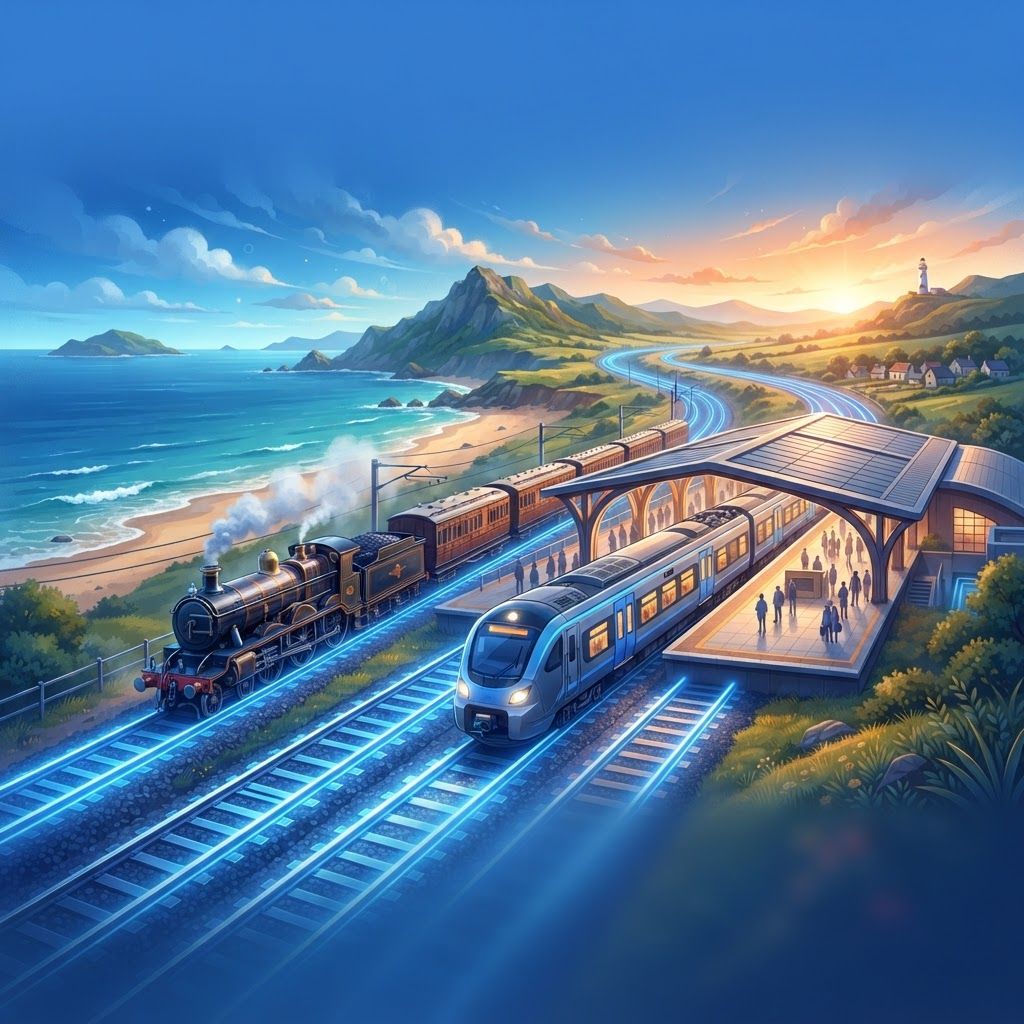
A Railway History Unlike Anywhere Else
Few places of comparable size have a railway story as distinctive as the Isle of Wight. At its peak in the early twentieth century, the island supported a dense network of lines connecting almost every town, built by several competing companies to serve the Victorian tourist boom. Most of it closed during the twentieth century, leaving a single surviving passenger route and a preserved heritage line.
What makes the island genuinely unusual is the rolling stock. The surviving line runs through a tunnel with restricted clearance, meaning standard modern trains cannot operate on it. For decades this resulted in the island running former London Underground stock, some of it remarkably old, giving the island a reputation among railway enthusiasts worldwide as a place where trains lived long past their mainland retirement.
Ten Railway Operators and Organisations
1. South Western Railway. The train operating company responsible for the Island Line, the surviving public railway running between Ryde Pier Head and Shanklin. It also operates the mainland services from Portsmouth and Southampton that connect with the Solent ferries, making it the single most important rail operator for island travellers.
2. Island Line. The eight-and-a-half mile route along the island's east coast, connecting the ferry and hovercraft terminals at Ryde with Brading, Sandown, Lake and Shanklin. Following a major upgrade programme, the line now operates refurbished former London Underground units, continuing the island's tradition while improving reliability and accessibility. It serves both commuters and the large number of visitors staying in the eastern resorts.
3. Isle of Wight Steam Railway. One of the finest heritage railways in Britain, running restored Victorian and Edwardian carriages hauled by historic steam locomotives between Wootton and Smallbrook Junction. What distinguishes it is authenticity: the carriages are genuinely period vehicles, meticulously restored, rather than generic preserved stock. It connects with the Island Line at Smallbrook Junction, allowing a combined heritage and modern rail journey.
4. Network Rail. The infrastructure owner responsible for track, signalling and structures on the Island Line, including the substantial engineering challenge of Ryde Pier, which carries the railway out over the sea to meet the ferries.
5. Wightlink and Red Funnel Rail Connections. The ferry operators function as integral parts of the island rail journey. Through-ticketing combining rail travel from anywhere in Britain with the Solent crossing makes car-free travel to the island straightforward, and the Ryde Pier Head interchange is one of the most direct ship-to-train connections in the country.
6. Hovertravel. The world's longest-running commercial hovercraft service links Southsea with Ryde in around ten minutes, connecting directly with the Island Line at Ryde Esplanade. For foot passengers it is the fastest route to the island and forms part of an integrated public transport chain.
7. Isle of Wight Steam Railway Trust and Volunteers. The charitable organisation and volunteer community behind the heritage line undertake locomotive and carriage restoration, permanent way maintenance and operations. Their workshops represent a significant repository of engineering heritage skills.
8. Rail Heritage and Enthusiast Societies. Groups dedicated to documenting and preserving the island's railway history maintain archives, run events and support restoration. The island's former Underground stock has attracted particular international attention over the years.
9. Former Railway Trails and Greenway Managers. Many closed island lines have become walking and cycling routes, including the popular Cowes to Newport path along the Medina estuary. Managed as green infrastructure, these former trackbeds now carry more people than the railways did in their final years.
10. Community Rail Partnerships. Volunteer-led partnerships support station adoption, gardening, artwork and promotion along the Island Line. Their work has transformed the appearance of several island stations and strengthened the connection between the railway and the communities it serves.
Travelling by Rail on the Island
The Island Line is genuinely useful rather than merely charming. It runs frequently, connects directly with the fast ferry and hovercraft at Ryde, and serves the main eastern beach resorts. For a visitor staying in Sandown or Shanklin and arriving as a foot passenger, it is by far the most convenient way to reach accommodation.
Through tickets from mainland stations to island destinations are available, and rover tickets combining rail and island bus travel offer excellent value for a multi-day visit. National railcards apply, and concessionary arrangements are in place for eligible residents.
The heritage railway operates a seasonal timetable, running most intensively in summer with special services around Christmas and other events. It is best treated as a destination in its own right rather than as transport, though the connection at Smallbrook Junction allows it to be combined into a longer journey.
Why the Railway Matters to the Island
Beyond transport, the railway is part of the island's identity and economy. The heritage line is a significant visitor attraction and employer, and the volunteer effort behind it sustains engineering skills that would otherwise disappear. The Island Line supports commuting to Newport and mainland employment, and it provides mobility for residents without cars in a part of the island where that matters.
Investment in the line, including infrastructure renewal and the introduction of refurbished rolling stock, has secured its future after years of uncertainty. Passive provision for possible future extension southwards has been discussed periodically, reflecting a persistent local ambition to restore more of the network.
Practical Tips
Check timetables for seasonal variation, particularly on the heritage line. Book heritage railway special events well in advance, as Christmas services sell out early. Allow connection time at Ryde, where the walk along the pier between the ferry and the train is exposed to weather. And if you have any interest in railways at all, the combination of a working former Underground train running along a Victorian pier and a genuinely authentic Victorian steam railway a few miles away is difficult to find anywhere else in the world.
Want your brand featured in front of decision-makers? Publish a guest post or get a link insertion in our guides through AAMAX's guest post and link insertion service.
Helpful Links
 SponsoredAAMAX — Full-Service Digital Agency
Write for Us
Share your expertise with our readers. We welcome guest contributions from industry specialists.
Pitch your idea