Understanding AI Driven Marketing Strategies
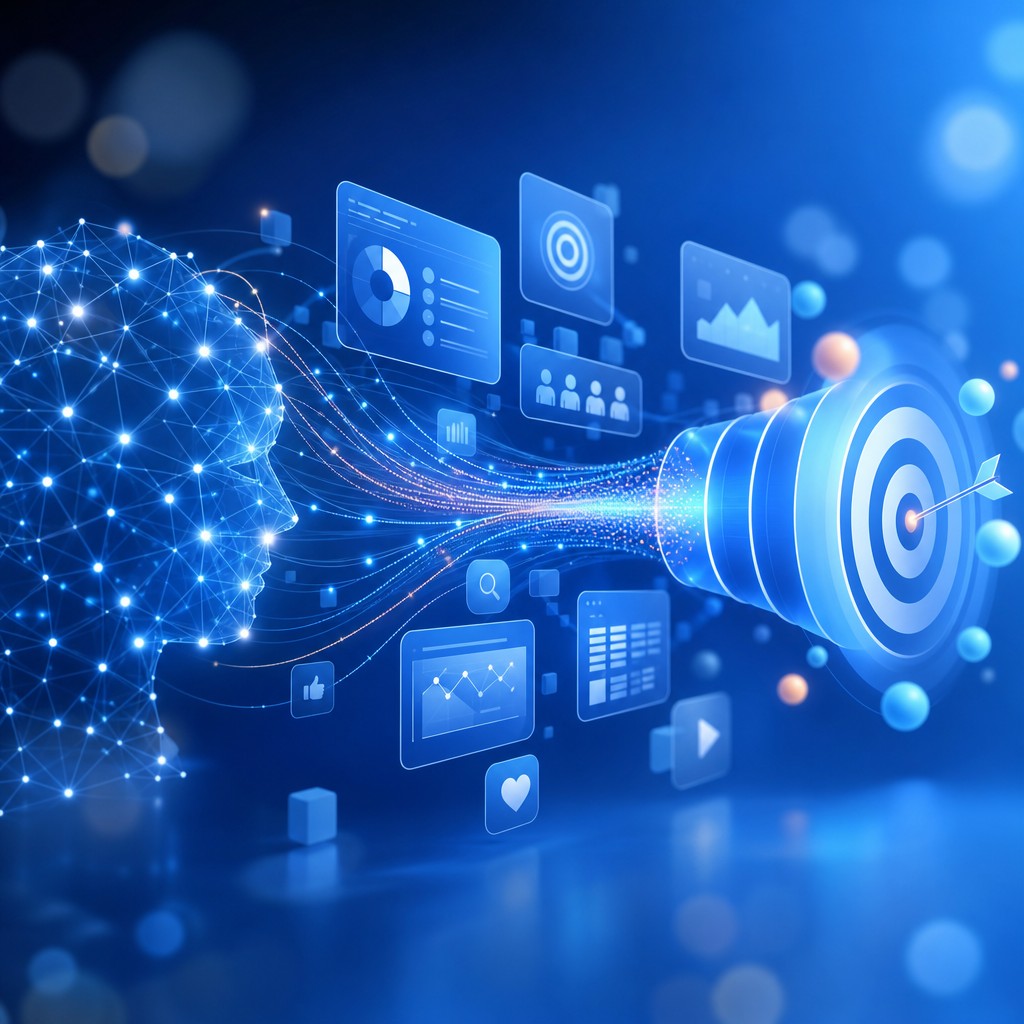
AI driven marketing strategies are structured plans that place artificial intelligence at the center of how brands attract, engage, and convert their audiences. Instead of relying solely on intuition or static rules, marketers use machine learning models to analyze huge volumes of behavioral, transactional, and contextual data, then act on the patterns those models reveal. The result is a marketing approach that is continuously learning, adapting, and improving rather than remaining fixed across an entire campaign cycle.
At their core, these strategies answer practical questions: which audience segment is most likely to convert, what message will resonate, when should it be delivered, and through which channel. By automating the heavy analytical lifting, AI frees marketing teams to focus on creativity, positioning, and strategic direction while the technology handles optimization in the background.
Partnering With AAMAX.CO for AI Marketing
Building an effective AI driven strategy often requires both technical expertise and marketing know-how, which is exactly where AAMAX.CO can help. They are a full service digital marketing company serving clients worldwide, and they specialize in combining artificial intelligence with proven marketing fundamentals. Their team can audit your current funnel, identify where intelligent automation will deliver the most value, and implement data-backed campaigns tailored to your goals. For brands that want to compete in AI-influenced search results, their generative engine optimization services help ensure your content is discoverable inside the AI experiences your customers increasingly rely on.
The Core Components of an AI Driven Strategy
A complete AI driven marketing strategy usually blends several capabilities. Predictive analytics forecast customer behavior, such as the likelihood of a purchase or churn. Personalization engines tailor content, offers, and product recommendations to individual users. Natural language processing powers chatbots, sentiment analysis, and content generation. Programmatic advertising uses real-time bidding informed by AI to place ads in front of the right people at the right moment.
These components do not operate in isolation. The strength of a modern strategy comes from connecting them through shared data so that insights from one channel inform decisions across all others. A signal captured from email engagement, for example, can refine which ads a customer sees and how a website personalizes its landing page for that same visitor.
Why AI Driven Strategies Outperform Traditional Approaches
Traditional marketing often depends on broad assumptions and periodic reporting. By the time a campaign is reviewed, opportunities to improve performance may have already passed. AI changes this dynamic by enabling real-time optimization. Models can reallocate budget toward high-performing segments within hours, test creative variations automatically, and surface emerging trends before they become obvious.
This responsiveness translates into measurable advantages: higher conversion rates, lower acquisition costs, improved customer retention, and more efficient ad spend. Just as importantly, AI scales personalization in a way humans simply cannot. Delivering individually relevant experiences to thousands or millions of customers at once is only feasible when intelligent systems handle the complexity.
Building Blocks for Implementation
Implementing an AI driven strategy starts with data readiness. Clean, well-organized, and accessible data is the fuel that powers every model, so investing in solid data infrastructure is essential. From there, brands typically define clear objectives, such as increasing qualified leads or improving lifetime value, and select tools that align with those goals.
Integration matters too. A strategy works best when AI tools connect with your customer relationship management system, analytics platform, and content infrastructure. Many businesses pair these efforts with a broader digital marketing program so that AI enhancements support a coherent overall plan rather than functioning as disconnected experiments. Finally, governance and human oversight keep campaigns ethical, on-brand, and aligned with business strategy.
Common Use Cases Across the Funnel
AI driven strategies add value at every stage of the customer journey. At the awareness stage, AI identifies look-alike audiences and optimizes ad targeting. During consideration, recommendation engines and dynamic content guide prospects toward the products most relevant to them. At the decision stage, predictive scoring helps sales and marketing teams prioritize the leads most likely to convert. After purchase, AI supports retention through personalized re-engagement, churn prediction, and timely loyalty offers.
Content creation is another fast-growing use case. AI assists with drafting copy, generating variations for testing, and analyzing which themes perform best. While human editors still shape voice and accuracy, the speed and scale these tools provide can dramatically increase a team's output.
Measuring Success and Avoiding Pitfalls
To know whether an AI driven strategy is working, brands track metrics tied directly to business outcomes rather than vanity numbers. Conversion rate, customer acquisition cost, return on ad spend, and customer lifetime value are common benchmarks. Continuous testing and clear attribution help teams understand which AI-powered decisions are driving results.
There are pitfalls to avoid as well. Poor data quality leads to poor predictions, so data hygiene cannot be neglected. Over-automation without human review can produce off-brand or tone-deaf messaging. And privacy compliance must be built in from the start, since responsible data use protects both customers and the brand's reputation.
The Future of AI Driven Marketing
As models become more capable, AI driven marketing strategies will grow more autonomous and more deeply integrated into everyday operations. Generative tools will produce richer creative assets, predictive systems will anticipate needs earlier, and conversational AI will handle increasingly sophisticated customer interactions. Brands that build a strong foundation today will be well positioned to capitalize on these advances.
Ultimately, AI driven marketing is not about replacing human marketers. It is about amplifying their impact, giving them sharper insights, faster execution, and the ability to deliver genuinely relevant experiences. For businesses ready to embrace this shift, partnering with experienced specialists like the team at AAMAX.CO can turn the promise of AI into a practical, results-focused reality.
Want your brand featured in front of decision-makers? Publish a guest post or get a link insertion in our guides through AAMAX's guest post and link insertion service.
Helpful Links
 SponsoredAAMAX — Full-Service Digital Agency
Write for Us
Share your expertise with our readers. We welcome guest contributions from industry specialists.
Pitch your idea